From recognising false information to checking images, videos and sources, the MyCountry229 project gave young people and communities concrete reflexes to deal better with disinformation in the age of artificial intelligence.
Today, a piece of information can travel through a community in a few minutes. A Facebook post, a TikTok video, a screenshot or a message shared in a WhatsApp group can quickly reach a large number of people.
But information that spreads quickly is not necessarily reliable information.
It may be old, incomplete, taken out of context, manipulated or simply false. With the evolution of digital tools and artificial intelligence, some content can also seem increasingly credible, making verification even more important.
This is the reality that MyCountry229, Young Ambassadors for Reliable Information addresses, a project led by AMP BÉNIN – Action Monde Productif, with the support of the Association of Bloggers for Active Citizenship (ABCA) and its partners, FIDEMO and INADES Formation.
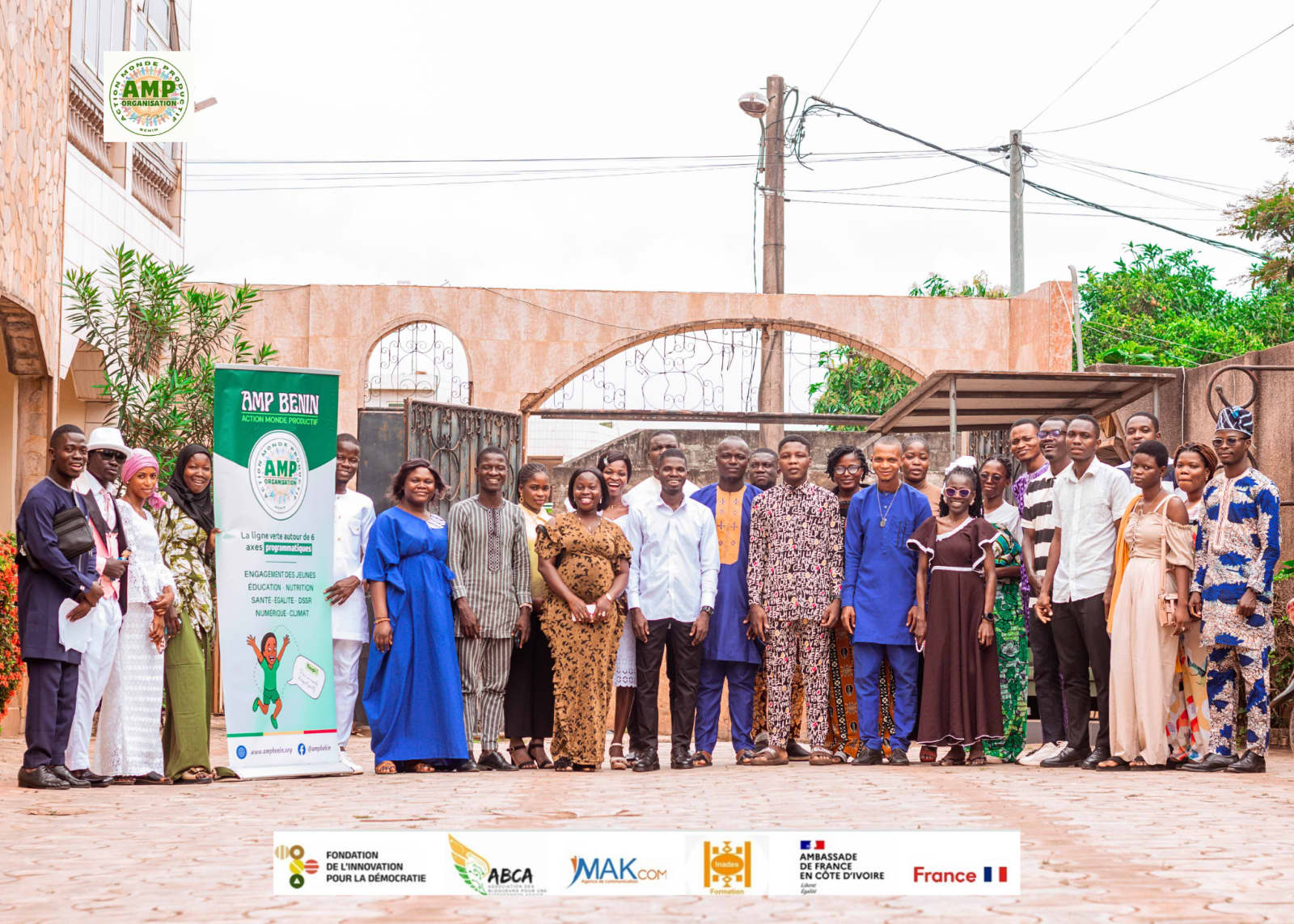
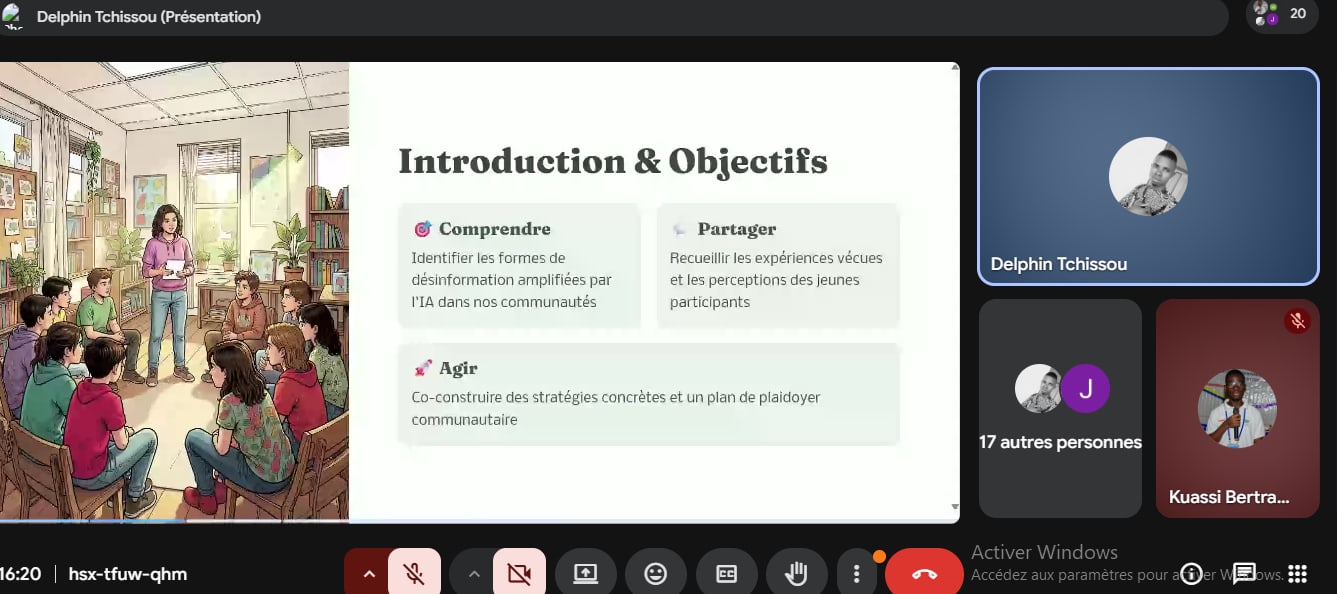
Through a ten-day digital campaign and three community activities held in Abomey-Calavi, Kpomassè and Ouidah, the project sought to convey a simple but essential idea: before sharing information, take the time to check it.
Understanding disinformation to deal with it better
The fight against disinformation does not begin only with verification tools. It also begins with understanding the mechanisms that make misleading content attractive and widely shared.
Some information seeks above all to provoke an immediate reaction. It plays on fear, anger, urgency, sensationalism or a false impression of authority.
When content strongly pushes us to react, our first reflex should therefore be to slow down. A strong emotion can be a signal that says: "Stop. I check before I share."
This approach helps us step back and avoid unintentionally contributing to the spread of false or misleading information.
Checking information starts with its source
One of the first reflexes passed on during the campaign is to look beyond the content itself. Before sharing information, several questions can be asked:
- Who is the author of the information?
- What is the source?
- When was the information published?
- Is the information confirmed by other sources?
- Does the content provide enough context?
The fact that a post is heavily commented on or widely shared is not proof that it is true. Likewise, a screenshot should not automatically be considered proof.
Verification sometimes takes only a few extra seconds. Yet those few seconds can prevent false information from being passed on to an entire community.
An image can be real and still misleading
Images play an important role in the way we get informed. They often give the impression of showing reality directly. But a real image can be used to tell a false story.
A photograph may be old and presented as recent, taken in another country or accompanied by text that does not match what it actually shows.
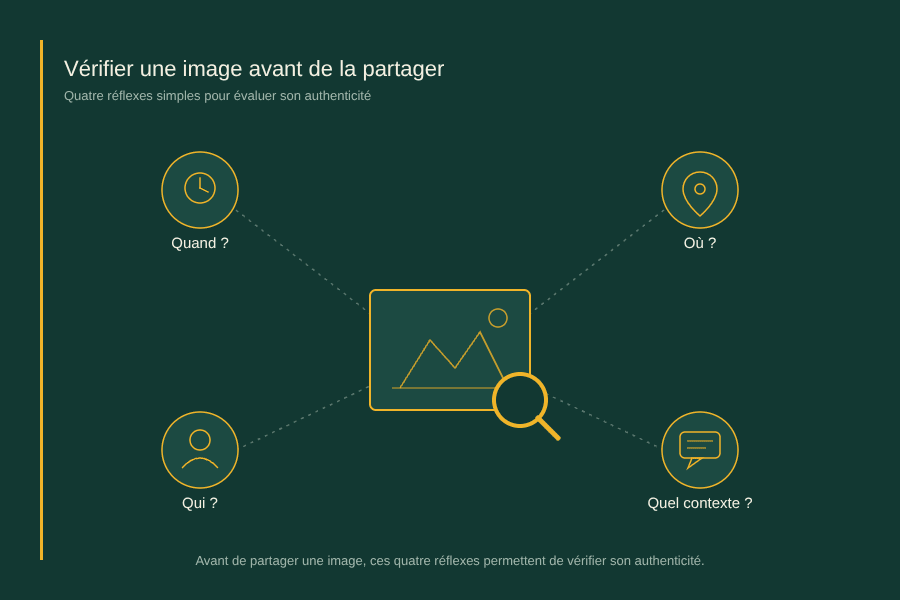
Faced with an image, four simple questions can help: When? Where? Who? What context?
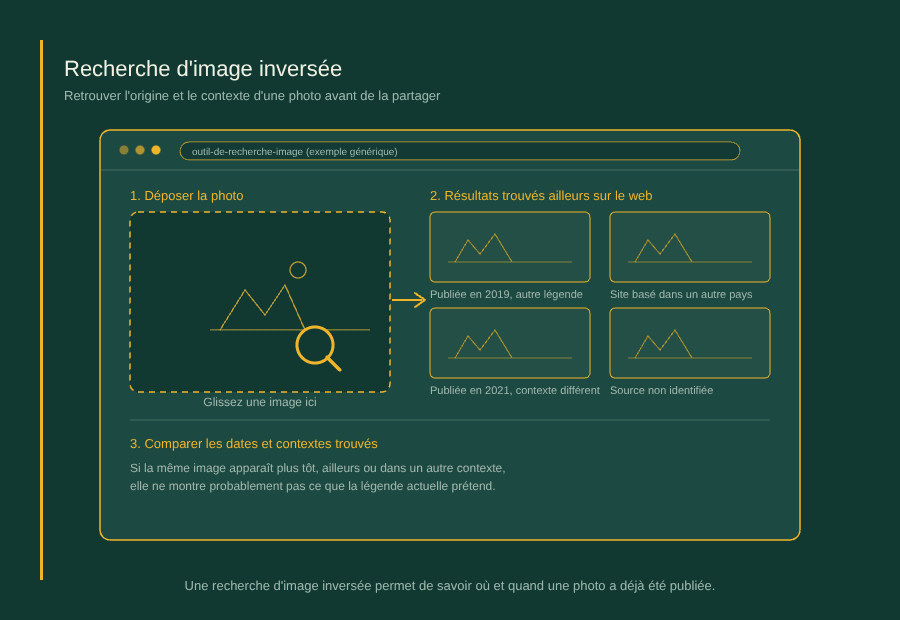
Reverse image search tools can also be used to try to trace its origin. The aim is not to become an expert in digital investigation, but to acquire enough reflexes not to take an image as proof without checking what it really shows.
A video does not always tell the whole story
Videos are particularly powerful because they give an impression of reality. Yet seeing a video does not necessarily mean knowing the whole story.
A video may be old, edited, taken out of context or accompanied by a misleading description. In some cases, new technologies also make it possible to create or alter audiovisual content in a very realistic way.
Before sharing a video, the same reflexes remain essential: Who posted it? When was it made? Where was it filmed? What other sources confirm the information?
So "seeing" is not always enough to "know".
In the age of artificial intelligence, checking matters even more
Artificial intelligence offers many positive possibilities in education, creation, entrepreneurship and communication. But it also makes it easier to produce content that may look authentic when it is artificial or manipulated.
Generated images, altered voices, transformed videos or automatically produced texts: Internet users can now be confronted with content whose appearance is no longer enough to judge its reliability.
The right question is no longer just: "Does this look true?" It must also be: "How can I check it?"
"Stop before sharing": turning verification into a reflex
Throughout the campaign, MyCountry229 sought to make verification simple and accessible, through a four-step approach:
- STOP — Do not immediately share surprising, alarming or highly emotional information.
- CHECK — Look at the source, the author, the date and the context, and look for possible confirmation.
- DECIDE — After checking, determine whether the information is reliable enough to be shared.
- SHARE — Share responsibly, only when the available evidence allows the information to be considered reliable.
This process gradually turns verification into a habit. Because fighting disinformation does not only mean learning to recognise false information. It also means learning not to become an unwitting relay of misleading content.
From the digital campaign to communities
This learning was not limited to social networks. After the online campaign, the project continued its work in the field through three community activities.
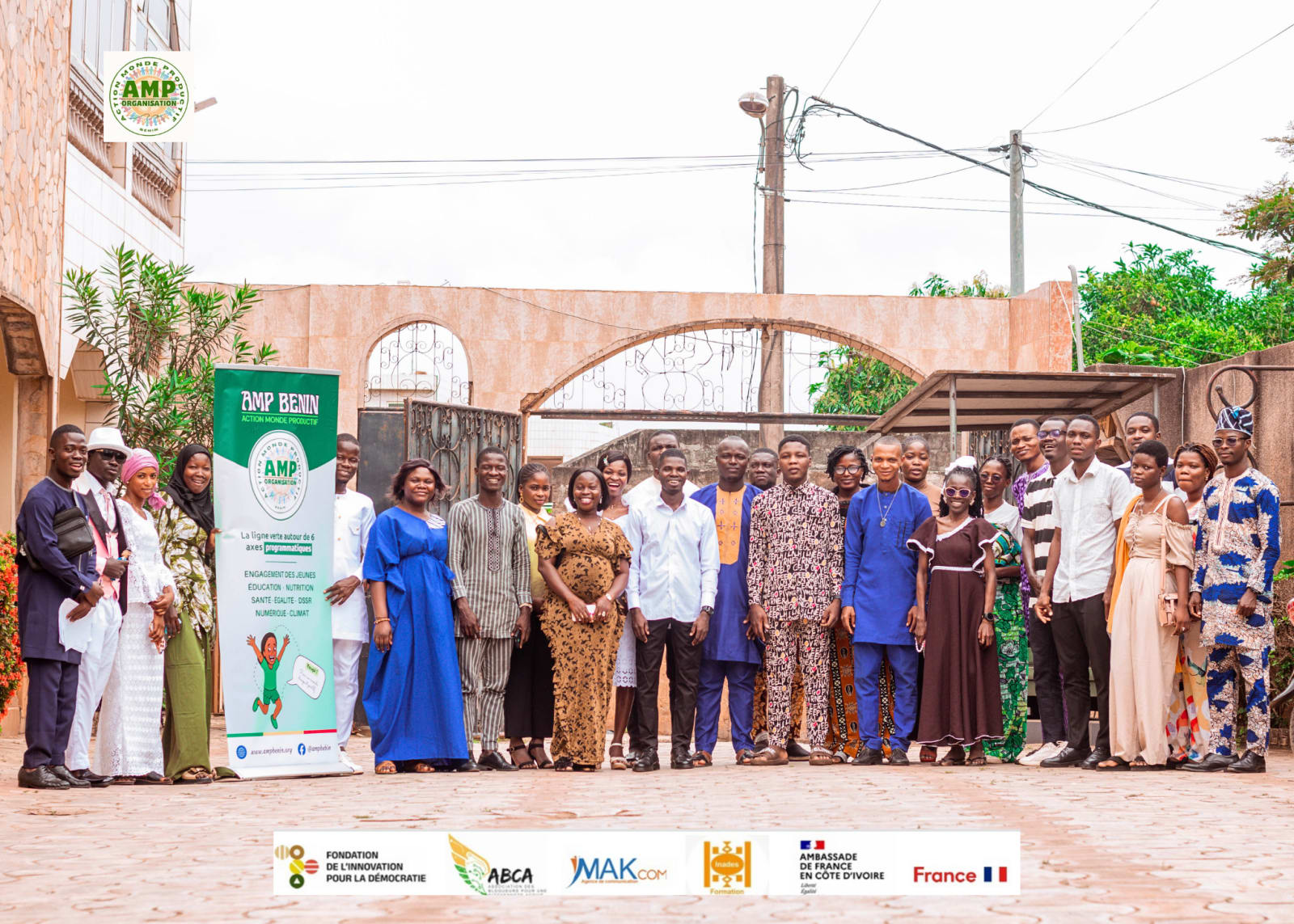
In Abomey-Calavi, an activity held on 29 August 2026 at the Hôtel Paramondo brought together some thirty participants around the issues of disinformation and information verification in the age of artificial intelligence.
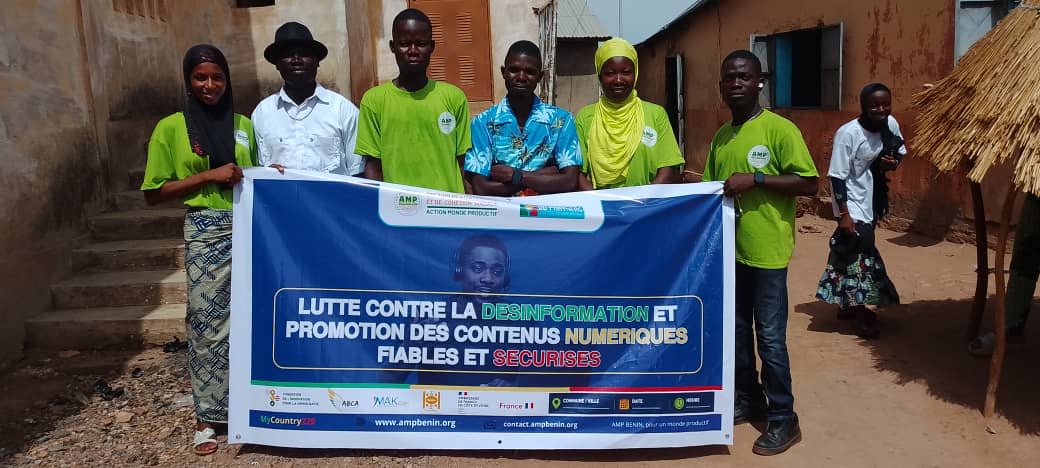
In Kpomassè, in the Sègbèhouè district, the session on 31 August placed particular emphasis on making the messages accessible. The discussions were adapted and explained in local languages, notably Fon and Wɛda, so that participants could better understand the mechanisms of disinformation and then pass this knowledge on in their communities.
This approach responds to an important reality: in villages and hamlets, unverified information can quickly spread from person to person and cause misunderstandings, tensions or concern.
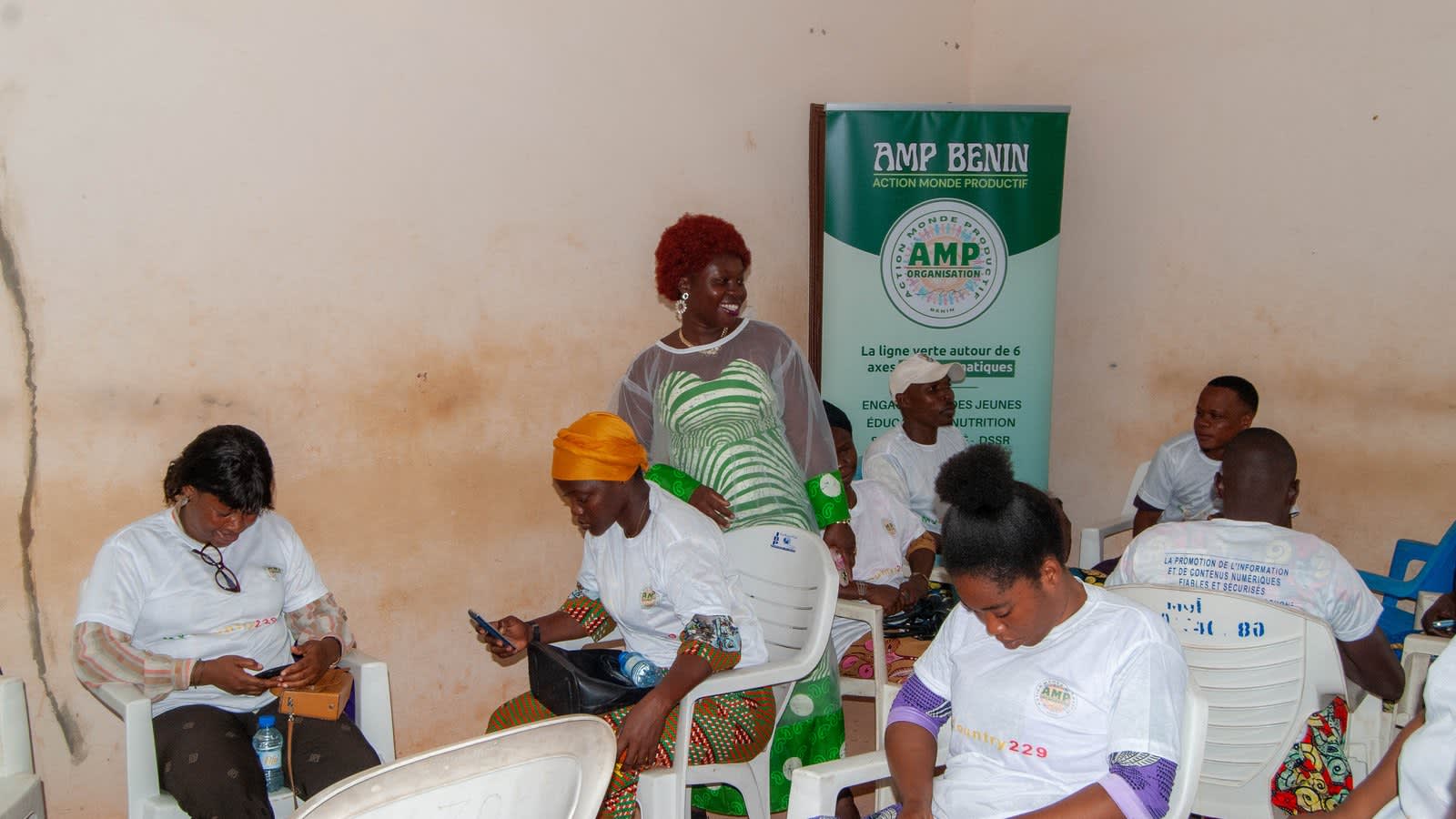
In Ouidah, on 2 September 2026, the activity held at BougeLabs brought together some thirty participants, notably young digital actors and talents working in fields such as graphic design, web development, photography, programming and incubation.
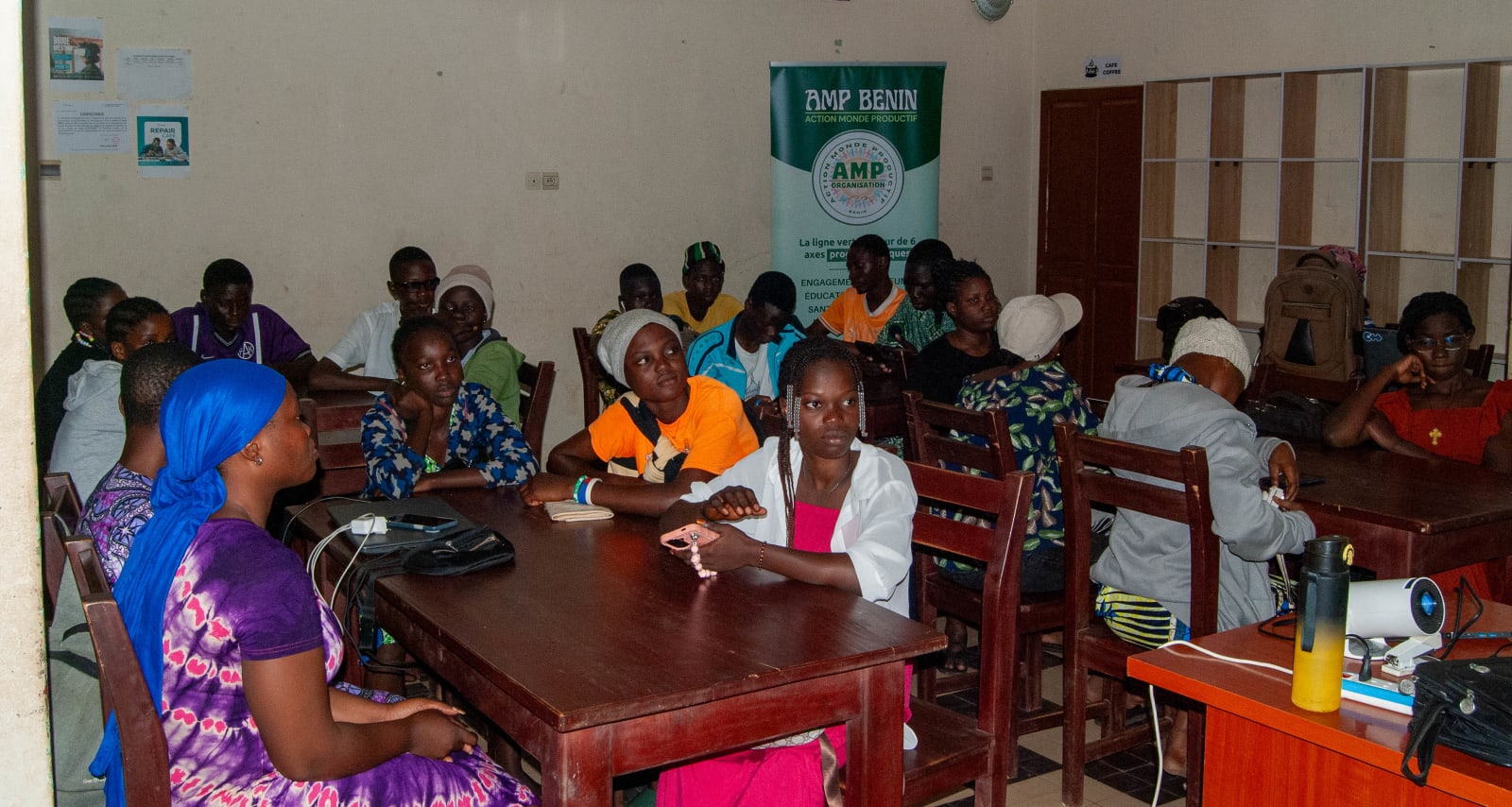
For these future digital professionals, awareness-raising takes on a particular dimension. Those who create, produce and distribute content also have an important role to play in building a more reliable digital environment.
From young users to true ambassadors
MyCountry229's ambition does not stop at passing on knowledge. The project seeks to foster a community of Young Ambassadors for Reliable Information, able not only to check the information they receive, but also to raise awareness among those around them.
The project at a glance
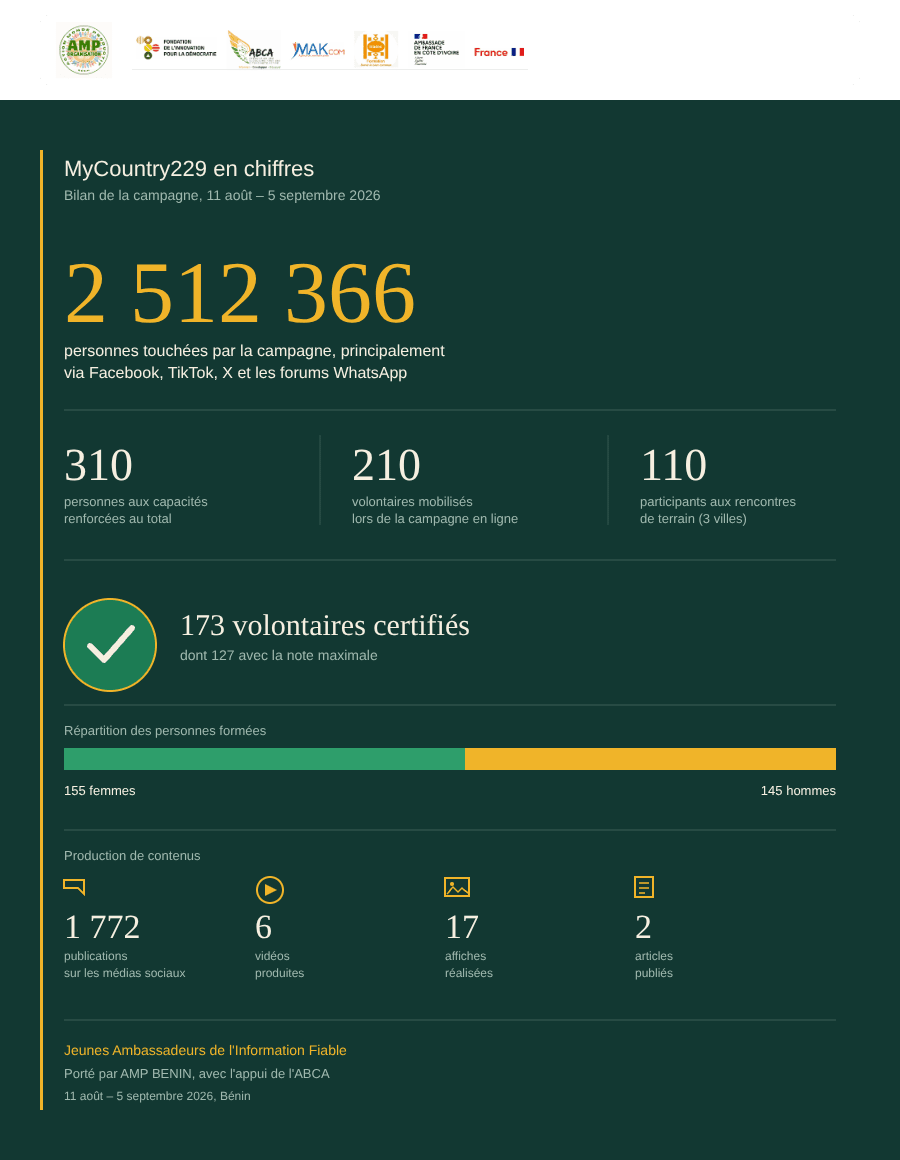
These figures show the scale of the mobilisation, but the most important issue remains the participants' ability to extend what they learned beyond the campaign.
A young person who checks information before sharing it can prevent it from spreading to several people. Someone who teaches their family to check an image can help protect those around them. A digital actor who takes the time to check a source before publishing can, in turn, influence many people.
This is how a collective culture of verification is gradually built.
A culture of information that must continue
The end of a campaign does not mean the end of the fight against disinformation. Content will keep circulating. Technologies will keep evolving. The methods used to deceive Internet users may also change.
The response must therefore be lasting: developing in everyone the habit of questioning, checking and contextualising before sharing.
This responsibility concerns young people, families, digital professionals, organisations, the media and, more broadly, all Internet users.
It is not about believing that everything is false. It is rather about not automatically taking everything we are shown as true.
Checking means taking a few moments to understand better before acting.
Conclusion: checking before sharing, a civic act
Through MyCountry229, one conviction has gradually taken hold: the fight against disinformation does not rest solely on fact-checking experts. It also begins with the everyday habits of every digital user.
Knowing how to identify a source, check a date, look for the context of an image, question a video or compare several sources are simple but essential gestures. They make it possible to move from fast consumption of information to a more responsible use of digital technology.
The young people mobilised through the project are thus called on to become relays of this culture in their families, their communities and their digital spaces.
Because, at heart, being an ambassador for reliable information starts with a simple gesture:
I check before I share. Do you?
Key figures
- 210 volunteers mobilised online
- 310 people trained in total
- 1,772 posts published
- 2,512,366 people reached
- 173 young people certified
- 127 certified with the top score