In the digital age, the Internet has become a vital space for exchange, socialising and expression. But for many, it is also a ground for invisible violence — cyberbullying, insults, blackmail, non-consensual sharing of images… This online gender-based violence (GBV) worsens a reality that is already pervasive in Beninese society. It is urgent to denounce it, raise awareness and protect victims.
1. The general context of GBV in Benin
- Between February 2019 and February 2022: 49,907 cases of GBV recorded.
- From 2022 to October 2024: 55,982 additional cases.
- Most cases involve psychological violence: insults, threats, harassment.
- Women and girls make up the vast majority of victims.
These figures show that GBV is not only physical: it also extends into psychological, verbal and digital spheres.
2. Consent online — a fundamental right
Sharing an image, a video or personal data requires free, informed and explicit consent.
Online, content can be copied, saved and shared endlessly. When the content is intimate, the consequences for the victim are multiplied. The absence of consent turns the act into digital violence.
Every time we share, let us ask for consent. Every time someone says "no", let us respect the decision.
3. Blackmail, silence and fear — the weapons of digital violence
Much digital violence starts with insults or humiliation, then escalates into blackmail: threats to disclose private images, personal information, conversations, and so on.
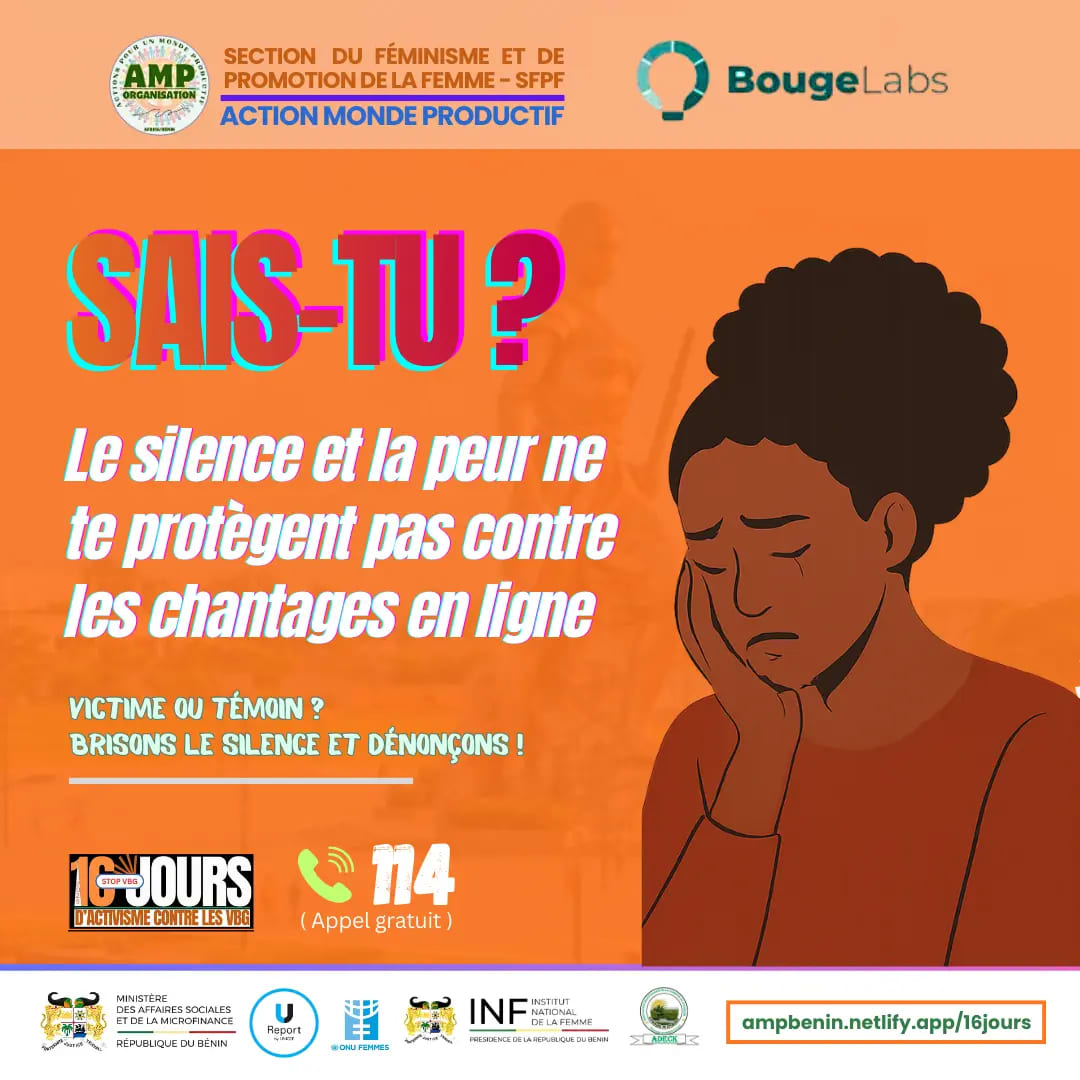
Silence does not protect. It strengthens the abuser's hold and exposes the victim to further violence.
Speaking out, reporting, getting support — these are acts of survival and protection.
4. Verbal violence online — insults, harassment and cyberhate
Insults, belittling, threats, psychological pressure… Verbal violence online leaves invisible scars: trauma, isolation, loss of self-esteem, anxiety.
Cyberbullying has no borders: it follows the victim home, at any hour.

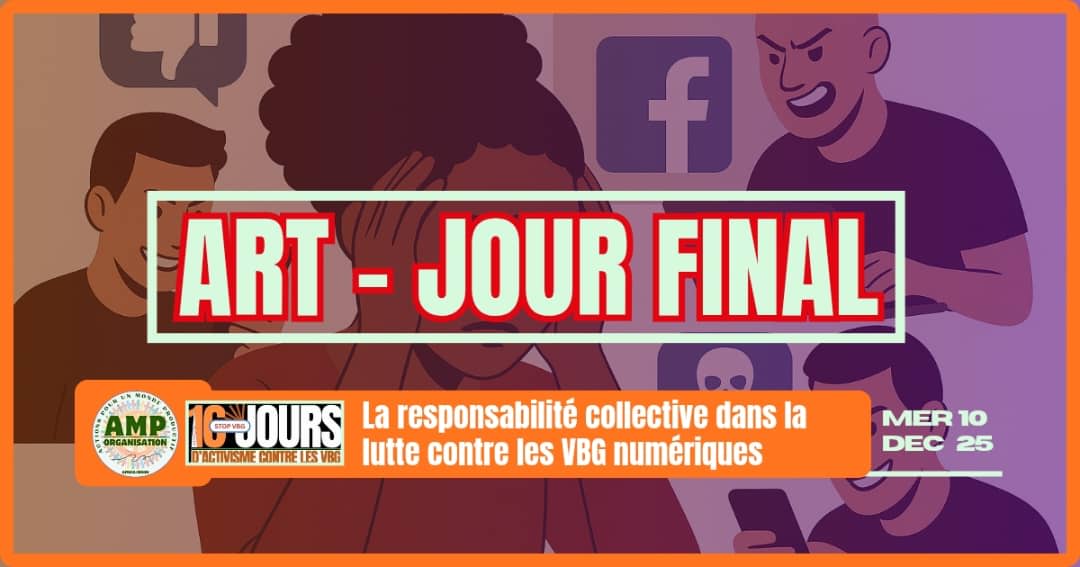
Illustration of verbal violence and digital harassment
Respect online is a right. Harassment is not an opinion.
5. Support and reporting structures in Benin
- National Women's Institute (INF): toll-free number 114 | WhatsApp: 01 51 07 88 88
- GUPS (one-stop social protection centres): support and follow-up in every commune
- AMP BÉNIN – Section for Feminism and the Protection of Women (SFPF): WhatsApp: +229 01 47 47 14 65 | Email: contact@ampbenin.org
- Republican Police: legal protection
- Youth associations and collectives: support, listening and guidance
Speaking up quickly is essential. No victim should remain isolated.
6. Acting together for a safer digital space
For victims:
- speak out, denounce, report,
- seek psychological and legal support.
For the community:
- raise awareness about consent and respect online,
- create safe, moderated spaces.
For platforms:
- improve moderation,
- make reporting easier,
- protect private data.
For civil society actors:
- raise awareness of digital citizenship,
- mobilise young people and influencers,
- offer spaces for support and listening.
Conclusion
Digital violence is not inevitable. Everyone can act: support, report, educate, protect.
Behind every screen, there is a life. Let us protect it.
Find out more: the 2025 16 Days of Activism campaign