In the digital age, the Internet has become a central space for exchange, socialising and work. But for many women in Benin, it has also become a ground of exposure and vulnerability. Gender-based violence (GBV) is no longer confined to homes or public places: it now enters messaging apps, social networks and professional environments.
Between 2020 and 2023, more than 94,000 GBV cases were recorded, 86% of which involve women and girls (Matin Libre, 2023). The psychological and digital forms of this violence — insults, cyberbullying, criticism and pressure over family status or personal choices — deeply affect women's lives, freedom and dignity.
This article explores three often invisible but real situations: digital attacks against women without children, criticism targeting older single women, and digital violence against married women whose household "does not meet expectations". Through these analyses, we aim to raise awareness, inform and propose concrete solutions to protect women and strengthen their digital autonomy.
1. Digital attacks against women without children
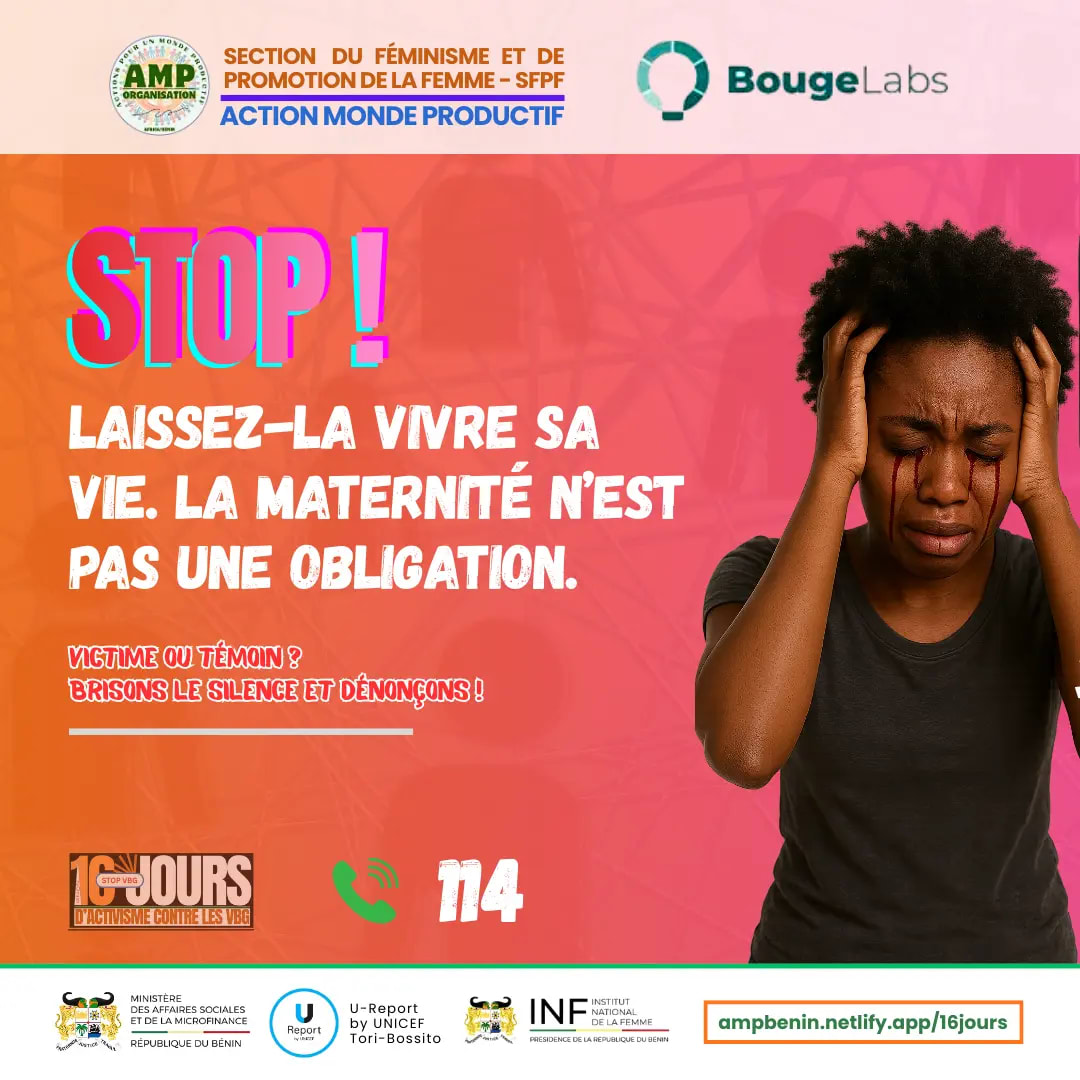
In Benin, women without children regularly face criticism and social pressure that also play out online. They receive messages, comments and posts targeting their private life, their choice not to have children or their family status.
These digital attacks are not mere words: they can cause stress, social isolation and a sense of marginalisation. In some cases, they go viral, amplifying the pressure on the victim and causing significant emotional distress.
Key message:
- Motherhood is a personal choice.
- Women have the right to live their lives without being harassed online.
Concrete actions:
- Report any abusive message or post.
- Seek support from structures such as the INF (toll-free number: 114 / WhatsApp: 01 51 07 88 88) or AMP BÉNIN.
2. Digital criticism targeting older single women
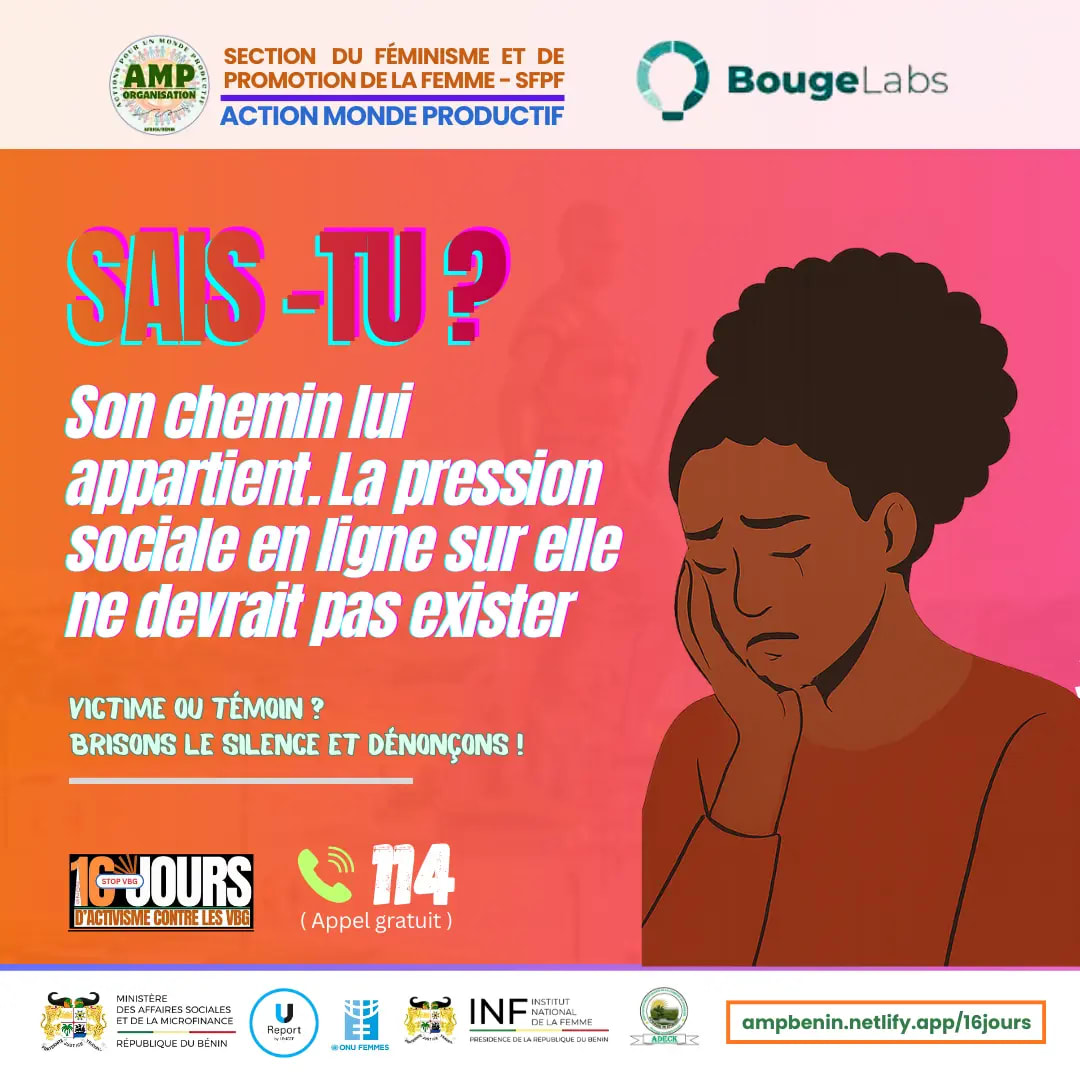
Single women, particularly older ones, are often targeted by criticism, rumours or comments on social networks. Judgements about their "marital status" or their personal life are used to make them feel guilty, isolate them or diminish their image.
This digital violence reinforces sexist stereotypes and can affect women's confidence, mental health and social and professional participation. According to a recent local study, nearly 32% of single women say they have received messages criticising their life choices or their status.
Key message:
- Every woman has the right to choose her own path in life.
- Digital judgement and pressure must never dictate her choices.
Concrete actions:
- Document attacks (screenshots, dates, content).
- Report them to the platforms or to support structures such as the GUPS and AMP BÉNIN, for support and follow-up.
3. Digital violence against married women whose household "does not meet expectations"

In Benin, some married women are victims of online criticism, threats or harassment when their household or married life is judged "not to meet" social or family expectations. This can take the form of comments on social networks, non-consensual sharing of private information or digital smear campaigns.
These attacks harm family balance, mental health and women's personal freedom. A 2023 study reveals that nearly 27% of married women have suffered digital attacks linked to their family life.
Key message:
- A woman's married life is not a public spectacle.
- Online criticism or harassment must never become a tool of control or humiliation.
Concrete actions:
- Contact support structures such as the INF (114 / WhatsApp 01 51 07 88 88), AMP BÉNIN and the one-stop social protection centres.
- Raise community awareness and report abusive posts to break the cycle of violence.
Conclusion
Digital violence against women in Benin takes many forms and seeps into their personal, social and family lives. Whether it is attacks against women without children, criticism of single women's life choices or harassment linked to married life, this violence threatens women's freedom, dignity and well-being.
It is crucial to act collectively: denounce, support, raise awareness and create safe digital environments. Specialised structures — INF, AMP BÉNIN, GUPS and the one-stop social protection centres — offer listening, support and practical advice to all victims and witnesses.
Digital technology must be a space of respect and safety. Behind every screen, there is a life to protect.