
In Benin, gender-based violence (GBV) remains a major challenge affecting thousands of women and girls. According to data from the Observatory for Women, the Family and Children (OFFE), through the Sidoffe-NG system, more than 94,001 cases were recorded between 2020 and 2023. Of these victims, 86.17% are women and girls.
And beyond physical, sexual or economic violence, a new ground is developing rapidly: digital technology as a space of control, surveillance and silent oppression.
1. When gender-based violence takes a digital form
Digital violence is now a reality: controlling phones, restricting Internet access, censoring posts, excessive surveillance, online harassment… This violence is less visible, but just as destructive.
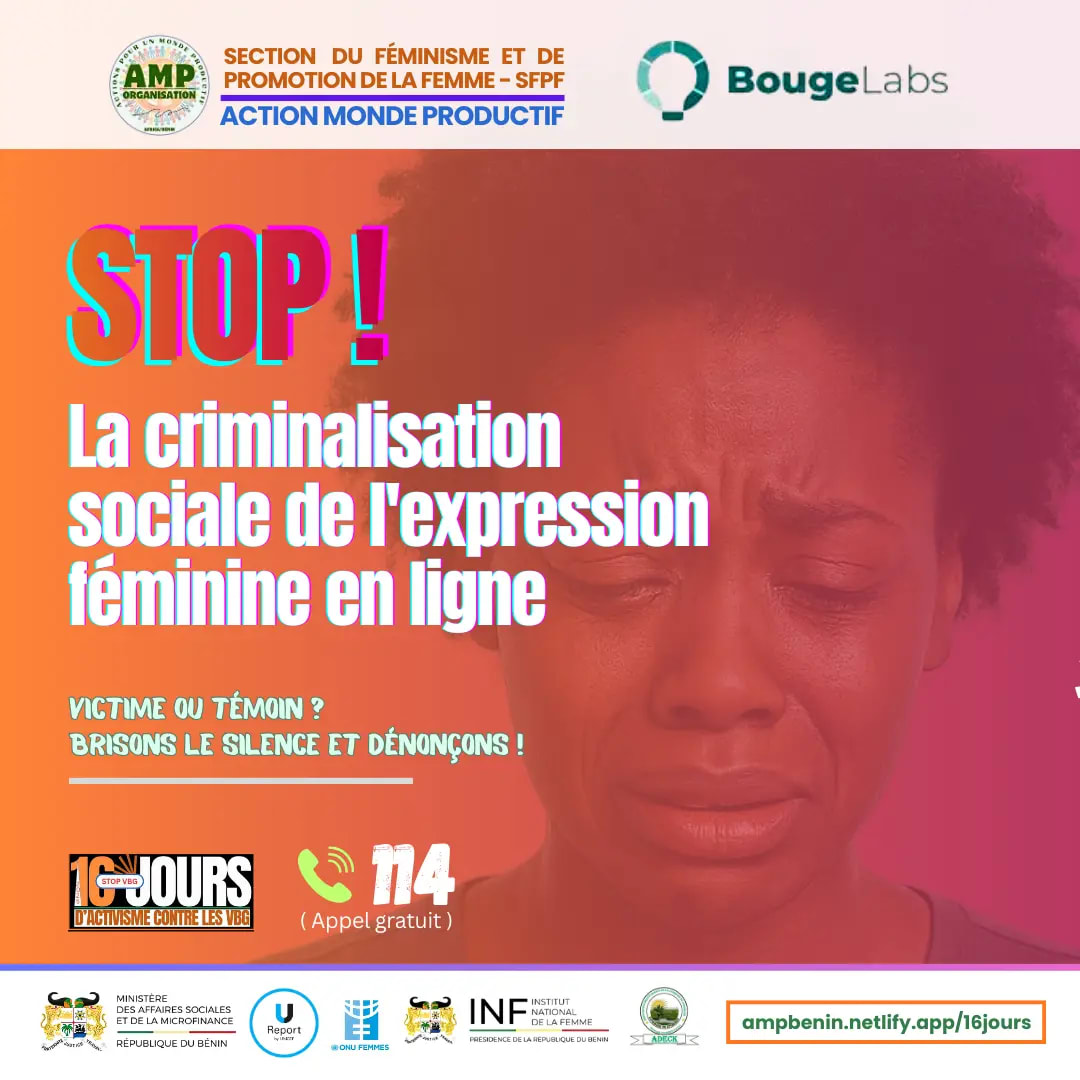
These forms of violence have a profound impact on:
- freedom of expression;
- access to information;
- dignity and autonomy;
- mental and social health.
Digital technology, meant to liberate, becomes a means of confinement.
2. Three concrete realities experienced by women in Benin
a) Social criminalisation of women's expression
In some households, when a woman posts or expresses herself online, she is judged, monitored or threatened. Using a phone becomes suspicious. This is a form of moral violence and social control.
b) "A married woman has no business on the Internet"
This persistent prejudice deprives some women of their digital freedom. Using social networks is seen as an act of rebellion, which constitutes symbolic violence and an obstacle to their autonomy.
c) Sexist attacks after a break-up or divorce
After a separation, many women face insults, threats, mockery and online smear campaigns. The break-up becomes a pretext for digital violence.

This violence is less visible, but it isolates, destroys trust and can lead to genuine psychological distress.
3. Key figures: why action is urgent
- 90.9% of GBV victims are women (2019–2022).
- Psychological and moral violence accounts for 47.06% of cases.
- The number of GBV cases kept rising between 2022 and 2024.
Digital technology accelerates violence when mindsets stand still. Women pay the price of a system that remains deeply unequal.
4. Why act — and act fast
Acting means:
- preserving the dignity and digital freedom of every woman;
- preventing psychological and moral violence from becoming normal;
- raising community awareness and breaking stereotypes;
- setting up protection and listening mechanisms;
- developing a respectful and responsible digital culture.
5. Concrete actions to take
Here is what everyone can do:
- Organisations: campaigns, listening units, support for victims.
- Communities and families: deconstruct prejudice, encourage digital freedom.
- State and institutions: strengthen laws, make access to justice easier.
- Individuals: support, report, educate, raise awareness.
Conclusion: for a free and respectful digital Benin
Digital technology must never become an instrument of oppression. Every woman must be able to access the Internet, social networks and public expression freely — without control, without fear, without shame.
Let us not shut down networks. Let us open minds.