In Benin, gender-based violence (GBV) still affects an alarming number of women and girls — and sometimes even men. Whether it is physical violence, psychological pressure, digital harassment or exploitation, victims often face the same obstacle: how can they report what is happening to them?
Fear of judgement, shame, family pressure or a lack of information prevent many victims from asking for help. Yet Benin today has effective, free and secure mechanisms for reporting any case of violence.
This article explains, step by step, how to report GBV, what remedies are available and why this act can change a life.
1. Understanding that GBV can be reported at any time
GBV takes several forms:
- physical and sexual violence;
- forced marriage;
- emotional or economic blackmail;
- cyberbullying, non-consensual sharing of images, online threats;
- discrimination based on gender or family situation;
- violence within couples or at work.
No type of violence is "too small" to be reported. Beninese law protects all victims, even without witnesses, even without visible injuries, even if the perpetrator is a relative.
2. Gathering evidence: the essential first step
Before reporting, it is important to document the violence. This can include:
- screenshots of messages, photos and online comments;
- audio or video recordings;
- medical certificates;
- testimonies from neighbours, friends or colleagues;
- dated details (time, place, digital platform, etc.).
Without evidence, a case is not lost, but evidence makes the procedure and protection considerably easier.
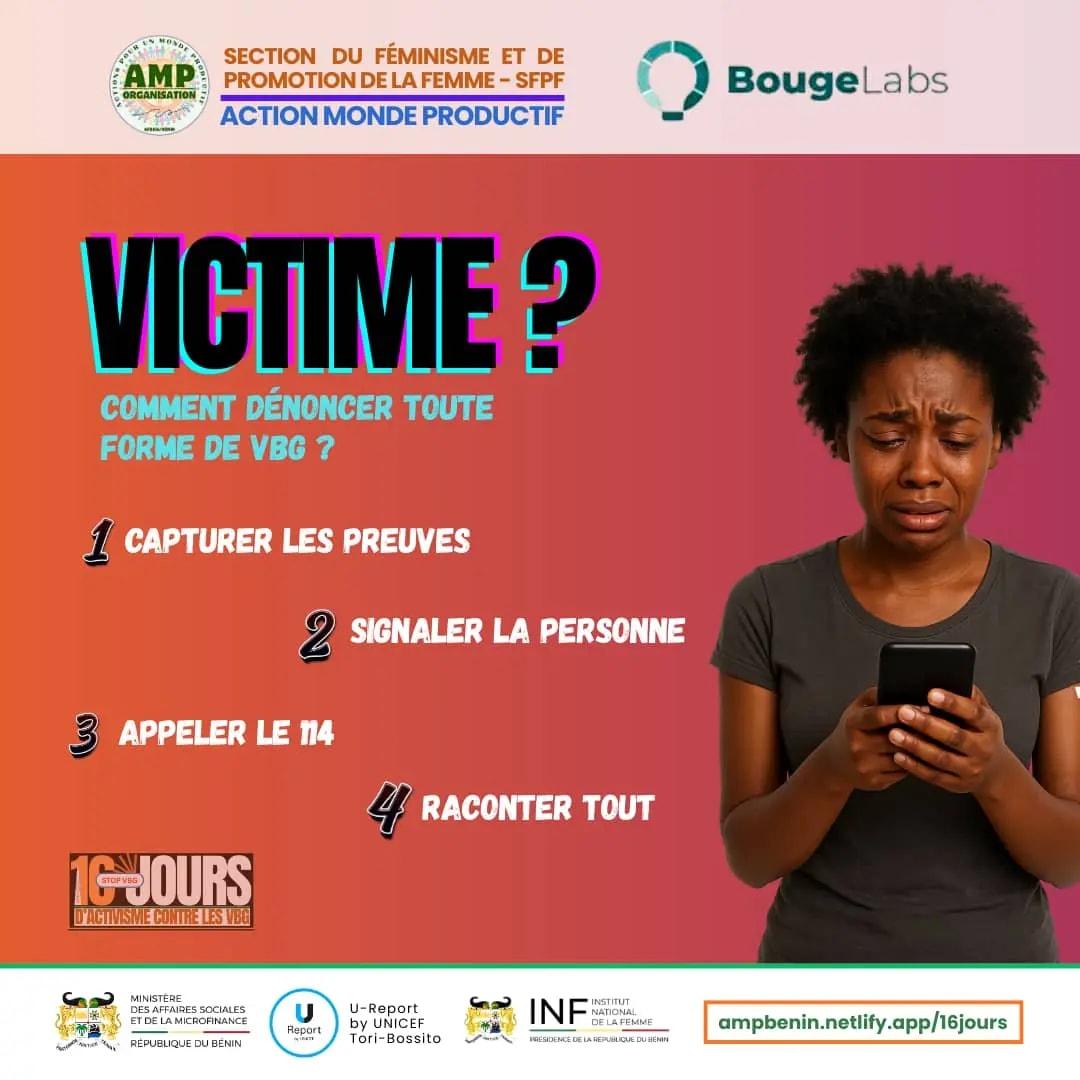
3. Reporting the abuser immediately
On social networks, platforms have internal safety mechanisms:
- Reporting on Facebook / Instagram
- Blocking on WhatsApp
- Reporting on TikTok
- Removal of abusive content
- Alerts for harassment or fraudulent accounts
This step does not replace an official procedure, but it limits the risk of repeat offences and protects the victim.
4. Calling 114: the free national GBV helpline
114 is a free emergency number available everywhere in Benin. It makes it possible to:
- explain the situation to a trained professional;
- be referred to health, social protection or justice services;
- receive immediate assistance in case of danger;
- obtain psychological and legal support.
A WhatsApp version is also available: 01 51 07 88 88.
Conversations are confidential, secure and handled without judgement.
5. Going to a one-stop social protection centre (GUPS)
The GUPS, present in every department, offer:
- social assistance;
- psychological support;
- legal guidance;
- protection for minors and adults;
- follow-up of repeated violence.
Women and girls find a space there for listening, assessment and safety.
6. Filing a complaint: a right, never a risk
In Benin, the law now protects victims against reprisals, even if the abuser is:
- a spouse,
- a parent,
- an employer,
- a colleague,
- or a stranger online.
A complaint can be filed:
- at a police station,
- at the court of first instance,
- with a public prosecutor.
Partner structures such as AMP BÉNIN, social centres and some NGOs support victims free of charge in this process.
7. Why report?
Reporting GBV does not mean destroying a family or "exaggerating" a situation. It means:
- protecting yourself
- preventing the abuser from harming someone else
- accessing essential rights (care, justice, psychological support)
- breaking out of silence and isolation
- saving a life — sometimes your own
Every report breaks a cycle of violence.
Conclusion
Gender-based violence is not inevitable. Thanks to the mechanisms available in Benin — the 114 number, the GUPS, specialised NGOs, digital platforms, the police and the courts — it is now possible to report, to be supported and to obtain justice.
Violence is never the victim's fault. Silence protects the abuser. Speaking out saves lives.