In Benin, as in many African countries, the digital space has become a place of socialising, expression, education and opportunity. But behind this positive momentum, another reality persists: gender-based violence (GBV) is now taking a digital form.
Religious criticism used to humiliate, defamatory rumours spread on social networks, threats linked to clothing… Traditional forms of violence find a powerful amplifier in the Internet.
This article explores three common forms of online GBV in Benin, their impacts, their origins and courses of action to better protect victims.
1. When religion becomes a pretext: digitalised religious criticism
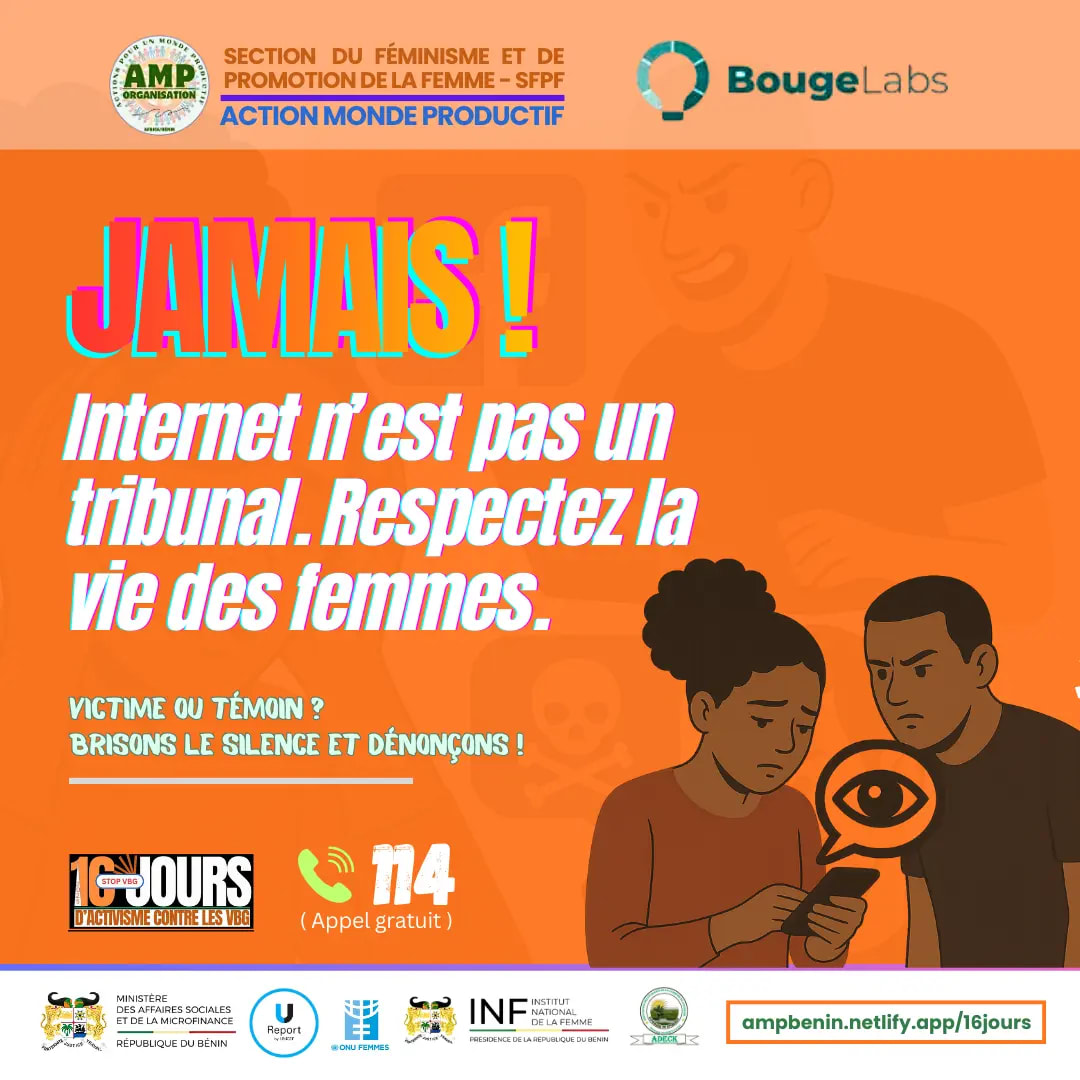
In several Beninese communities, religion is a major cultural reference. But on social networks, some people misuse this influence to judge, belittle and attack women.
Comments such as "You are not a good Christian/Muslim woman", "Your clothes are sending you to hell" or "A respectable woman doesn't post this kind of photo" are becoming common under women's posts.
Why is it violence?
- It imposes a personal vision of faith.
- It aims to control women's behaviour.
- It shames and humiliates publicly.
- It creates a climate of digital fear.
In a context where religion represents moral authority, these attacks weigh even more heavily on victims, who find themselves judged not only as individuals, but as believers.
No belief justifies violence. Social networks must not become moral tribunals.
2. Digital sabotage of reputations: the Internet turned into a social weapon
In Benin's secondary schools, universities, markets, neighbourhoods and companies, reputation is essential social capital. Yet some women see this capital destroyed in a few clicks:
- doctored photos,
- false accusations,
- sharing of private conversations,
- anonymous sexist comments,
- rumour campaigns in WhatsApp or Telegram groups.
In a country where reputation can determine professional opportunities, where social shame can isolate a person and where communities are highly interconnected, a digital rumour can destroy a real life.
Frequent consequences
- Loss of confidence
- Social isolation
- Leaving social networks
- Depression
- Loss of employment or opportunities
The Internet is not a court. A woman never deserves to be punished in public for existing.
3. Threats linked to clothing: digitalised control of the body

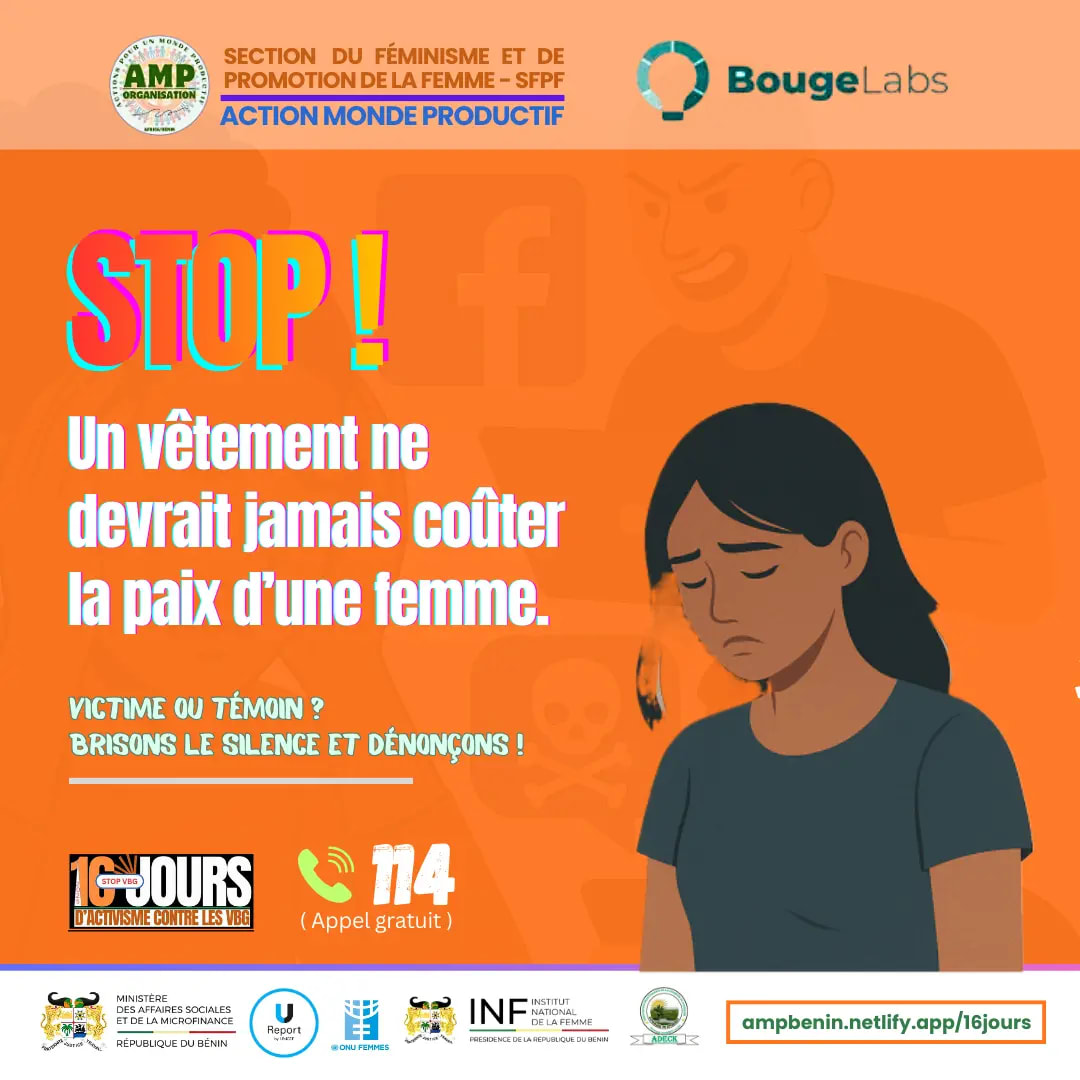
In Benin, thousands of women report insults or threats simply because they posted:
- a photo deemed "too short",
- shorts,
- tight trousers,
- a sleeveless top,
- or even an "unsuitable" wrap (pagne).
For some, posting a simple photo becomes a risk.
These attacks are not about clothes, but about control: dictating how a woman should present herself, limiting her digital freedom, monitoring or threatening her to silence her.
Direct impact
- Self-censorship
- Fear of social networks
- Family or community pressure
- Infringement of freedom of expression
Freedom of dress is a right. No item of clothing justifies digital violence.
Why is this violence increasing in Benin?
Several factors combine:
- strong social pressure around the role of women,
- conservative religious and cultural norms,
- the trivialisation of online harassment,
- a weak culture of responsible digital use,
- anonymity that fosters impunity.
Girls and women are the main targets because they bear the weight of social expectations.
What can be done? Courses of action to protect and act
1. For victims
- Talk to someone close, an association or a specialised structure
- Keep evidence
- Report the abuser on the platform
- Seek psychological or legal support
2. For witnesses
- Support victims
- Never share a rumour or defamatory content
- Report actively
3. For communities
- Promote a healthy digital culture
- Train young people in their rights and responsibilities online
- Encourage respect, even in disagreement
4. Support structures in Benin
INF — National Women's Institute
- Toll-free number: 114
- WhatsApp: 01 51 07 88 88
- Psychological, legal and social support and care for GBV victims
One-stop social protection centre (GUPS)
- Present in several communes in Benin
- Receiving complaints
- Referral to the appropriate services
- Social follow-up
AMP BÉNIN — Section for Feminism and the Protection of Women (SFPF)
- Support for victims
- Awareness-raising
- Community actions
- Digital advocacy
- Education in respect online
Other local associations
- Youth clubs
- Women's organisations
- Human rights civil society organisations
Conclusion
Digital GBV in Benin is not a matter of "virtual conflicts". It hurts, isolates, humiliates and destroys lives.
Malicious religious criticism, digital sabotage or attacks on clothing: all of it is rooted in the same mechanism — controlling women, limiting their voice, shrinking their space for expression.
Yet the Internet can be a place of freedom, creativity and solidarity — provided we protect it, together.
Defending women online means defending our communities. Denouncing this violence means building a fairer Benin.